
































Patient safety - Projects EUNetPaS European Union Network for Patient Safety
The European Union Network for Patient Safety (EUNetPaS), a project coordinated by the French National Authority for Health (HAS), was officially launched in Utrecht (The Netherlands) on February 28-29, 2008 and ended in July 2010.
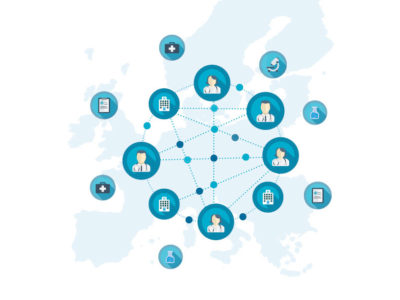
The project, which is funded and supported by the European Commission within the 2007 Public Health Programme, aimed to establish an umbrella network of all 27 EU Member States and EU stakeholders to encourage and enhance collaboration in the field of Patient Safety.
EUNetPaS united representatives of the European medical community (doctors, nurses, pharmacists, managers of healthcare organizations, patients’ associations) and the institutional partners involved in patient safety with the states of the European Union (members of national patient safety organizations and Member States' Ministries of Health). It also promoted the involvement of stakeholders through national platforms organized around one EUNetPaS national contact point in every EU Member State.
EUNetPaS focused on four key areas:
Promoting a Culture of Patient Safety
Collection and exchange of information concerning Patient Safety at the Member State level by the National representatives and experts .
Structuring Education and Training in Patient Safety
Proposal of a Core European curricula for Patient Safety in higher education and as part of continuing education taking into account patients and health care professionals needs.
Implementing Reporting and Learning Systems
The identification, collection and structuring of Patient Safety information within the EU, providing Member States with a database of solutions to related issues that they can draw upon.
Pilot Implementation of Medication Safety
Improve medication safety in hospitals by identifying good practices, translating them into tools and testing these tools in selected hospitals. This component of the project was led by HOPE.
EUNetPaS facilitated the exchange of information and establish common principles at the EU level through the integration of knowledge, experiences and expertise gathered from Member States and EU stakeholders. It will facilitate the development of Patient Safety programs in Member States and provide support to those countries less in the field. EUNetPaS also contributed to the establishment of a European community of hospitals involved in Patient Safety. Links and documets
Good Medication Safety Practices in Europe. Results of the implementation
Recommendations concerning the transferability and implementation of good practices from one Member State to another
Analysis of the establishment of the EU community of hospitals on the basis of their pilot implementation
EUNetPaS Patient Safety Culture report focusing on indicators
Compendium of good practices and examples of regulation, legislation and organization in patient safety
General Guide for Education and Training in Patient Safety
Diversified teaching programs for Medical and nursing schools and Continuing professional development
Library of European reporting and learning systems
Share Learn and Exchange (SEaL) system containing high-level patient safety information form EU member states
SIMPaTIE Safety Improvement for Patients in Europe 
www.simpatie.org
The Simpatie (Safety Improvement for Patients in Europe) Project was among the accepted proposals for co-financing in the call for proposals from the European Commission Public Health work programme 2004. The project aimed to develop EU-wide commonality and transparency in methodology on patient safety in healthcare institutions. A mapping exercise across a minimum of 20 member states determined the status of activity and strategic planning on patient safety.
A database with standardised format was developed. Data for benchmarking good practice will be an additional output. In parallel a working group of experts will develop a common vocabulary, outcome indicators and internal and external instruments for improvement in patient safety, based on the framework of the Council of Europe. A third work team will utilise material from the other two to develop a consensus approach to health strategy in patient safety. This was done on 18 September 2006 in Luxembourg. The final work stream concentrates on dissemination using established professional, institutional and patient networks.
A Patient Safety Vocabulary
Establishing a Set of Patient Safety Indicators
Catalogue of Patient Safety Indicators
Patient safety - Other activities
Recommendation on patient safety…
On 15 December 2008, the European Commission adopted a communication and a proposal of a Council recommendation that aims to raise awareness in Member States and health care services about the need to fight against healthcare associated infections caused by incorrect or delayed diagnoses; surgical errors and medication related errors.
During the drafting process, HOPE was strengthening the position of the hospitals regarding the Recommendation. http://ec.europa.eu/health/ph_systems/patient_eu_en.htm
High Level Group on health services and medical care -
working group on patient safety
In 2005, the European Union set up a new group of discussion between Member States that provide a political guidance, under the High Level Group on health services and medical care and chaired by the European Commission DG SANCO. Among the six working groups created within the High Level Group, one was dealing with Patient Safety. HOPE was invited to join this Working Group. On 12 September 2008, the working group on Patient Safety met for the last time. Since April 2009, the terms of reference of the Group widened to healthcare quality issues and a new Patient Safety and Quality of Care Working Group met for the first time. The working group:
http://ec.europa.eu/health/ph_overview/co_operation/mobility/
high_level_documents_en.htm
Study tour on patient safety-reporting systems - 2007 On January 2007, a study tour was organized in Denmark by the Danish Regions at request of HOPE, inviting HOPE members and several other European Healthcare organizations to join the visit. HOPE has strongly expressed the need of the adoption in all Member States of reporting systems that enables to learn from adverse events. The aim was to understand the way the Danish reporting system had been designed and implemented as well as the way it works. Blame free culture - HOPE Board of Governors - 2006 HOPE Board of Governors adopted in Amsterdam on 21 April 2006, a position paper “Promoting a blame free culture in order to reduce medical injuries”. As mistakes appear in every human activity, there is an opportunity to learn from mistakes and to prevent them. The paper gives some ideas about a patient safety culture and a blame free incident reporting systems. Finally, it concludes with some ideas on what hospital management could do without waiting for new incident reporting systems. Cardiff conference - 2005 On 23 June 2005, HOPE together with the Welsh NHS Confederation organized in Cardiff an international conference on Patient Safety. The event, part of the HOPE Exchange Programme, gathered over 300 health professionals from 27 countries. The conference also set the scene for the UK presidency of the European Union, starting on 1st July 2005, and confirmed that patient safety was a UK chosen health focus for its term. Luxembourg Conference - 2005 In April 2005, HOPE co-organized with other European organizations led by the Standing Committee of Doctors (CPME), a conference on Patient Safety, during the Luxembourg presidency of the European Union. The aim of the event was to debate the issue on three different levels: national frameworks, primary health care and hospitals. The conference addressed recommendations to the EU institutions and national authorities. The conference, in line with the work of HOPE was concluded by the adoption of a Luxembourg Declaration. The Luxembourg Declaration:
http://www.eu2005.lu/en/actualites/documents_travail/2005/04/
06Patientsafety/ |